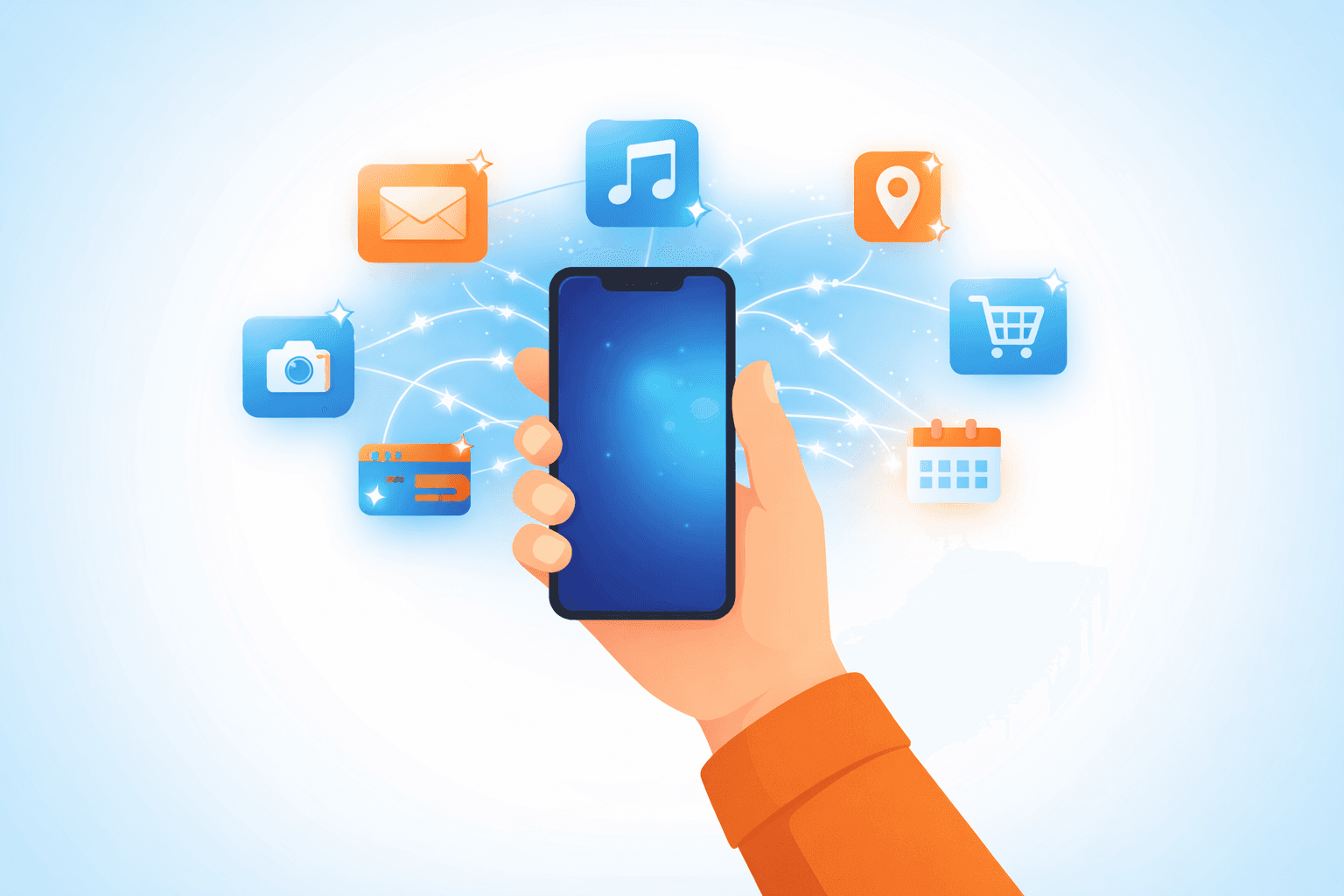
If someone asked you how many times you used AI today, you might say zero. In reality, by the time you have finished your morning coffee the number is probably closer to a dozen. AI is woven into so many tools that it has become invisible.
Here are ten examples you almost certainly use — and what the AI is actually doing behind the scenes.
1. Email Spam Filters
Every email that lands in your inbox has been judged by an AI system. Gmail alone blocks nearly 10 million spam messages every minute. The AI analyzes sender reputation, content patterns, link behavior, and how millions of other users responded to similar emails. It learns continuously — every time you mark something as spam, you are teaching it.
2. Phone Camera
When you take a photo in low light and it looks clear, or when your phone blurs the background in portrait mode, that is AI at work. Modern smartphone cameras use machine learning to decide how to process every single pixel. Night mode, face detection, automatic scene recognition — all AI.
3. Maps and Navigation
Google Maps does not just calculate the shortest route. It predicts traffic conditions using data from millions of phones, estimates arrival times by learning from historical patterns, and reroutes you in real time when conditions change. The prediction is so accurate that it feels like it can see the future. It cannot — it is just very good at pattern matching.
4. Streaming Recommendations
Netflix and Spotify analyze what you watch or listen to, when you pause, what you skip, and what you replay. They compare your behavior with millions of similar users to suggest content you are likely to enjoy. Netflix estimates that its recommendation engine saves the company over a billion dollars a year in customer retention.
5. Banking Fraud Detection
Every credit card transaction you make is evaluated by AI in milliseconds. It compares the transaction against your spending patterns, location, device, and time of day. When it flags something unusual, your bank contacts you. This system catches fraud that would be impossible for human analysts to spot in real time.
6. Autocomplete and Predictive Text
Every time your phone suggests the next word as you type, an AI model is predicting what you are most likely to say based on context. Smart compose in Gmail goes further, suggesting entire sentences. These systems learn from billions of messages to predict what comes next.
7. Voice Assistants
Siri, Alexa, and Google Assistant use multiple AI systems in sequence: one to convert your voice to text, another to understand what you meant, and a third to generate a response. Each step involves a different type of machine learning model working in milliseconds.
8. Social Media Feeds
The posts you see on Instagram, Facebook, LinkedIn, and X are selected by AI. The algorithm evaluates thousands of possible posts and ranks them based on what it predicts will keep you engaged. The order is not chronological — it is personalized to your behavior patterns.
9. Online Shopping Suggestions
Amazon's recommendation engine generates over 35 percent of its total revenue. It tracks what you browse, what you buy, what you return, and what you linger on. Then it cross-references that with millions of other shoppers to predict what you will want next.
10. Calendar and Scheduling
Tools like Google Calendar now suggest meeting times, estimate travel duration between appointments, and even propose focus time blocks. These features use AI to learn your patterns and preferences over time.
What This Means for You
You are not an AI beginner. You have been using AI for years. The difference now is that tools like ChatGPT have made AI visible and interactive, which means the skills you need are shifting from passive use to active collaboration. Understanding that you are already an experienced AI user is the first step.